Subscribe with us Online

Subscribe with us eTeachingMe A full online Curriculum for parents, and anyone like, who have babies, toddlers, and preschoolers. Where we "make time meaningful again" at home or anywhere, easily! www.eteachingme.com
Showing posts with label fine motor skills. Show all posts

Wednesday, November 6, 2013

TRACING? 10 Creative Ways to Teach...

Tracing is a beginning skill that kids need to and can learn around age 2 to help with early writing and fine-motor development.  Below are some helpful activity ideas to help you teach tracing skills to your toddler and preschooler.  The KEY when teaching tracing - to make it easy on their eyes and make it engaging so they WANT to do it!  All 10 of these activities below will help you do just that .... AND the best part, they are all AFFORDABLE and EASY to prepare!

1. USE A HIGHLIGHTER TO TEACH TRACING - Using a highlighter shows children "one continuous line" - therefore, makes it easier for them to follow along and less stimulating as those "dotted tracing letters workbooks".  When you ask them to "trace" - Say a simple phrase they would understand, such as, "can you follow along the yellow lines with your marker?"  Always show and model for them what it is you want them to do, before expecting a child to do it on their own (for the first time).


2. USE CLEAR TAPE TO TEACH TRACING - Have your child use their finger or a marker to follow along the clear tape on a colored sheet of paper (for easy viewing).


3. USE PLASTIC COOKIE CUTTERS TO TEACH TRACING - Have your child use their finger to follow the outline of the cookie cutter.  Then, have them put the cookie cutter down on white paper, and use a marker to trace its outline.


4. USE GLUE TO TEACH TRACING  - Help your child use liquid glue to trace the outlines of letters, lines, or shapes on a sheet of paper.


5. USE PAINT TO TEACH TRACING LINES - Have your child use a paint brush and paint to trace lines, or letters, you have drawn out on a sheet of white paper using a highlighter, as shown below.


6. USE PAPERCLIPS TO TEACH TRACING - Have your child use a pen and paperclips to trace their outlines.


7. USE YOUR CHILD'S HAND TO TEACH TRACING - Have your child trace the outline of their hands, feet, or your hands on a sheet of white paper or the sidewalk with chalk.


8. USE CHALK TO TEACH TRACING - Write your child's name with a piece of white sidewalk chalk outside, have them use colored chalk to trace over it!  You can also substitute by having them use a paintbrush with water to trace over the letters written in chalk, as a form of "erasing it!"  FUN!


9. USE HOMEMADE PATTERN SHEETS TO TEACH TRACING - Create some fun, different pattern sheets (have them laminated at the local Office Depot) and give your child a dry erase marker.  Have them "trace" or follow the patterns on the sheets, like shown in the picture below!


10. USE POPSICLE STICKS TO TRACE PLAY DOUGH LETTERS - Create letters in play dough, then have your child use Popsicle sticks to stick in the play dough following the letters outlines.  View in picture below!

Wednesday, April 17, 2013

How does your child grasp???


Stages of Pencil Grasp

By: Kristin Miller, M. Ed. in Curriculum and Instruction

CEO/Founder eTeachingMe

First we need to understand that at every stage, every child is different and will develop at a variety of rates.  It is important to continue to work with your child at each stage of pencil grasp development, do not worry if they meet the "common grasp stage" or not; consistency is key to helping any child learn and grow!  Please enjoy reading, and keep up the hard work parents, as your child develops at their own pace, and own unique capabilities!

1.  READ:  Fine and Gross Motor Development Chart so you can have a clear understanding of expectations for your child's age.

 2.  Please view the Development Stages of Pencil Grasp chart below.  This gives you a basic understanding of what to work on and expect out of your child at each developmental stage.

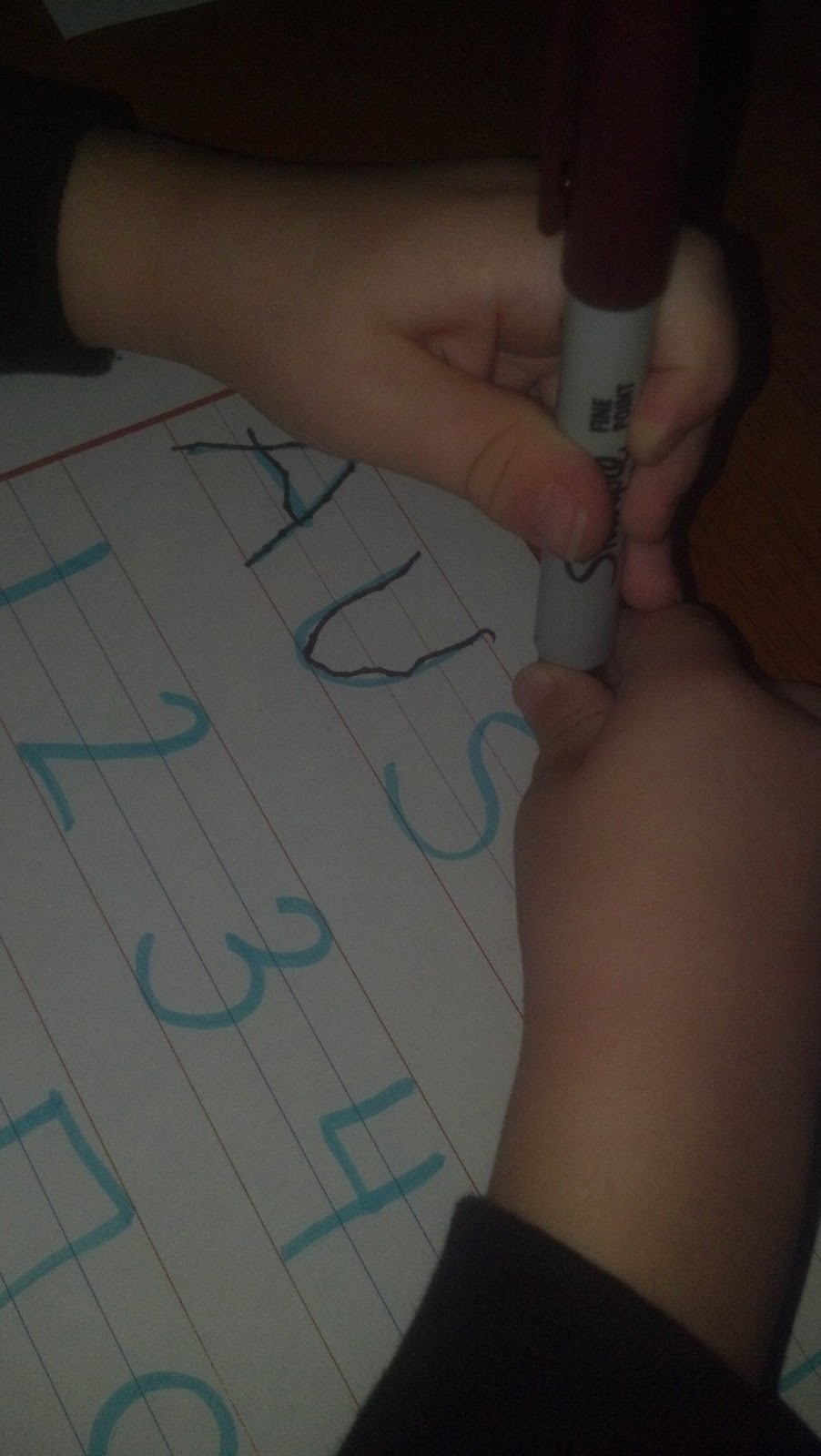
 3. View the picture examples of my children below, you can see what is normal and relate it to the basic understanding of where your child is at in their pencil grasp development.  This helps you to see first hand, what to expect.  

Pre-Toddler Stage
Infant - Fisted Grasp
1 years old
 
Pre-Toddler Stage
Full Fisted Grasp
2 years old

Toddler Stage
Palmer Grasp
Grasps with hand and moves with elbow
2 1/2 years

Immature 5-Finger Grasp
Preschool Stage
3 years old


Pre-Kindergarten Stage
Mature 3-Finger Grasp
Starting to use and develop
3 1/2 years old